There can be no doubt that women feel less safe than men out on the streets, despite 3-4 times more violent crime directed at men and boys. This is a good point point to dispose of the often heard argument that violence against men and boys does not matter because it is mostly committed by people of the same sex. Most men are not violent, for example, one study showed that 63% of violent crime was committed by 1% of men, so lets suppose that at a very generous estimate, 5% of men are prone violence (I suspect it is much less than that), are we really going to throw the other 95% of men ‘under a bus’ because of that 5%? – That would certainly appear to be the feminist ‘logic’. Proponents of this kind of argument seldom make it about other races who commit violent crime at higher rates. Looking at racial disparities in violent crime it would, quite properly, be considered an outrage if we dismissed them because members of that racial group also committed more crime.
Returning to the subject, why do women feel less safe than men walking the streets? First, I assume it is true even though I have not seen adequately powered studies comparing women’s subjective sense of safety to that of men. It seems entirely plausible*.
I think the reasons fall under a number of categories which I will discuss in turn 1) Availability heuristic 2) Rigged statistics 3) Confected moral panics 4) Social contagion 5) VAWG propaganda 6) Crime Fiction.
Availability Heuristic
Humans are not natural statistical reasoners and we are all vulnerable to cognitive biases. The availability heuristic is a mental shortcut we make when thinking of the frequency of certain events. The more easily something can be recalled the more important or frequent it must be. To put it another way, ‘ones judgements are based on what comes to mind’. Because crimes against women, particularly if they are middle-class, young, attractive and blond, are reported more than crimes against other groups, they would come more readily to mind and inform our sense of personal safety. Compare for example, the coverage of of the death of Sarah Everard with that of murdered private investigator Daniel Morgan. Both raised worrying issues over the conduct of the metropolitan police, but the former has received orders of magnitude more media coverage. When boys of Afro-carribean descent are murdered in our streets it may not even make out of local news and, as a result, we underestimate the dangers they face because we struggle to recall individual cases.
Rigged Statistics
Rigged statistic abound in feminist literature. Most commonly, they consist of data shorn of context, but sometimes outright fabrications are promoted and a good example is violence against women and girls (VAWG) statistics. As William Collins put is in his blog Illustrated Empathy Gap ‘violence does not mean violence, women does not mean women and girls does not mean girls’. Violence against women and girls includes violence committed against men and boys. This fabrication is required because feminism is dependent on a constant narrative of victimisation and dismissal of problems faced by men.
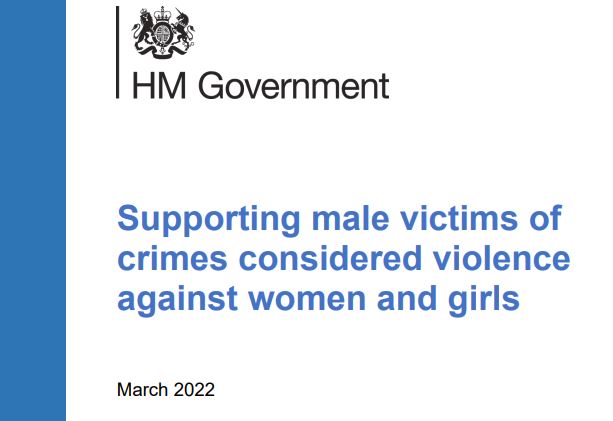
For example, male victims of domestic violence (1 in 3 cases) are counted under VAWG and boys subject to child abuse are counted as girls.
It is no accident that we are being fed information that is deliberately misleading. Resources follow victimhood, so the bigger the VAWG category can be made the more resources will flow to taxpayer funded feminist charities. Aside from being immoral, there is price to be paid for this statistical legerdemain. The inflated VAWG statistics can affect the subjective sense of well-being of women and girls.
Confected Moral Panics
Perhaps the best example of a confected moral panic is the recent concern over ‘spiking’- in particular, by injection. The BBC, who you might expect to behave in an even handed fashion ‘poured petrol on the flames’. Take, for example, the article Girls Night In: ‘spiking is part of going out so we are staying in.’ The article was written by an activist Sophie Gallagher rather than criminologist or someone with background in toxicology. The article appeared be stitched together from uncorroborated stories from social media. It was claimed, without evidence, that spiking ‘has been an ingrained part of university and going out culture and for too long the issue of women’s safety has been a women’s problem’ No evidence was presented for this hyperbolic claim. Even the case reported in the article seem insubstantial, a 20 year old who suddenly felt unwell and collapsed on her boyfriend – that was it. Elswhere it was claimed by the BBC that here had been 1,382 reports of women being injected with drugs without their consent. In fact, there had been no verified cases of needle spiking. It would be almost impossible to serrupticiously inject someone with a sufficient volume of a drug to cause sedation without their being very aware of it. It would require a large needle and time. This was fear mongering of the worst sort being peddled by a supposedly respectable outlet.
Social Contagion
Ideas, often wildly distorted or wrong, can easily spread through a population through social interaction, and none of us are entirely invulnerable to this phenomenon. However, it is accepted that females, perhaps because of their higher receptivity to social cues, are more prone to such phenomena. For example, rapid onset gender dysphoria ROGD predominantly affects girls and often occurs in clusters in schools and colleges where the girls are in contact with each other. Similarly, research has revealed striking sex differences in conformity to a prevailing opinion. On study showed that women were more likely to agree with the clearly false statements of a group strangers. Others have argued that the overrepresentation of women in cult groups may also be due to social contagion. Another recent social contagion was the rise in cases of Tourette’s, or at least people mimicking the ticks of Tourettes after watching Tik Tok videos, there were nine girls for every boy mimicking these videos. A meta analysis of episodes of mass hysteria has shown that they are 2.5 times more likely to spread in female groups. This predisposition sets the stage for exaggerated fears of violence from males spreading through groups.
VAWG Propaganda
There are numerous initiatives around VAWG but none around violence against men and boys VAMB. For example, there are posters on the London Underground focussing on VAWG. In the words of Times Columnist Emma Duncan there are posters that ‘give the view that the Tube is crowded with men who while away the time between Warren Street and Walthamstow molesting women‘ The reality is different, what I see are people crammed in looking at the floor, often too tired to give a damn about their fellow citizens.
There is CPS reporting on VAWG but no equivalent for violence against men and boys (VAMB). My local park has initiatives to minimise the risks of violence faced by women and girls even through the three most recent assaults have been on boys.
This imbalance feeds into the idea that women and girls are most at risk and it may amplify their sense of danger while providing false reassurance to men and boys.
Crime Fiction
This genre, both in print or on television, is primarily but not exclusively consumed by women. Although, in real life, the majority of of murder victims are male and from disadvantaged backgrounds, in fiction this is reversed. In dramatised crime, most victims are young attractive and female. This is not, as feminist commentators have argued, due to societal misogyny. Indeed, it is quite the reverse, men and women are more likely to feel empathy and anger in response to female victimhood. As a result, viewers feel more ‘drawn in’ when female victimhood is portrayed. A downside of this overemphasis on violence against women, is that it may bleed into our subjective impression of the relative risks faced by the two sexes.
What should be done?
The answers are obvious. Let’s try to reduce the risk of violence for everyone and end the ‘all victims are equal but some are more equal than others‘ culture that is endemic in our society. Crime reporting should not be left in the hands of activists particularly at the BBC which should, but does not, pride itself on impartial reporting. This would also have the benefit of limiting social contagion. Finally, let’s put a stop to rigged statistics that inflate the frequency of VAWG. Such statistics serve the interests of nobody; men, women, boys or girls.
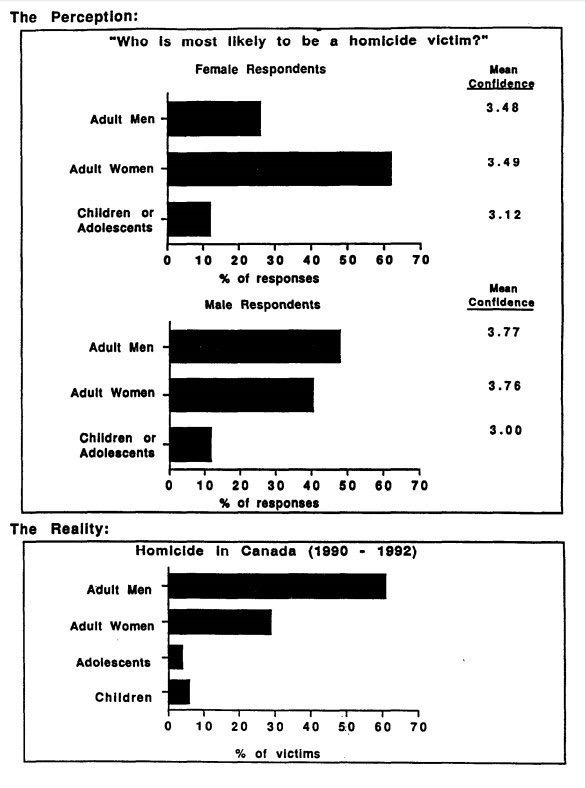
*It is true as this figure shows, albeit from Canada

 toxic feminism