It is, I believe, obvious that feminism has been harmful to men and, in particular, boys. However, this argument alone will ‘cut little ice’ with feminists in the media and in parliament. I want to suggest that feminism is also harmful to women. Not only indirectly through its consequences upon men but directly through distortion of priorities that result in harm to women.
Gendered narratives
Unless an issue can be weaponised and used against men, feminists are not interested. This means that many issues that are important to women as well as men are ignored by feminist campaigners.
For example, interpersonal violence is useful to feminists because there is some asymmetry, with men being on average more violent than women. Even here, the truth is much more nuanced than most feminists would have you believe and it is certainly not a one-way crime. Despite this, all resources are allocated in one direction. Because of this gendered narrative, a male victim of DA is deserving of no compassion or support while a female victim is. Not only that, for statistical purposes a male victim of domestic violence will be counted under VAWG statistics. The problem for women is that feminists take no interest in issues that can’t be weaponised against men. Take suicides for example, twice as many women die each year by suicide as are murdered. In 2023, 174 women were murdered, while more than twice that number (388) committed suicide (see here). Not only that, while the number of homicides has been dropping each year for the last twenty years the number of suicides has been stable.
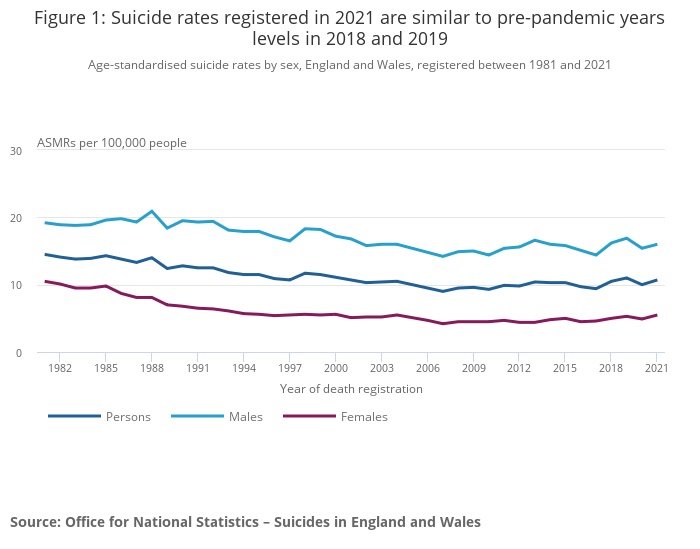
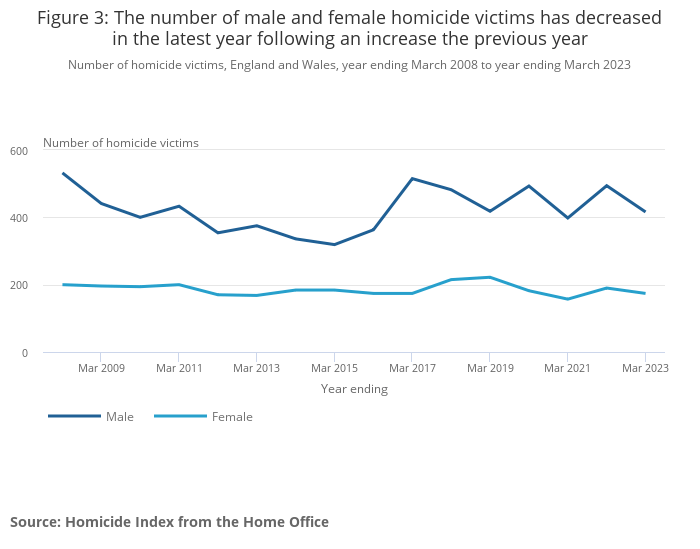
You will not hear Jess Phillips reading out the names of women who have committed suicide in Parliament each year. Not because it would take twice as long, I am sure that wouldn’t bother her at all, but because it is inconvenient to her narrative.
Why are suicides among women and girls not an issue? Because, I believe, feminists can’t draw attention to them without drawing attention to the much greater number of men and boys committing suicide each year. If it doesn’t fit the ‘gendered narrative’ construct it is ignored and that is to the detriment of women as well as men. To get a flavour of the feminist response to rising the profile of suicides and suicide prevention measures I recommend watching Jess Phillip’s reaction to a day in parliament to discuss the issue of suicides.
Transwomen are women
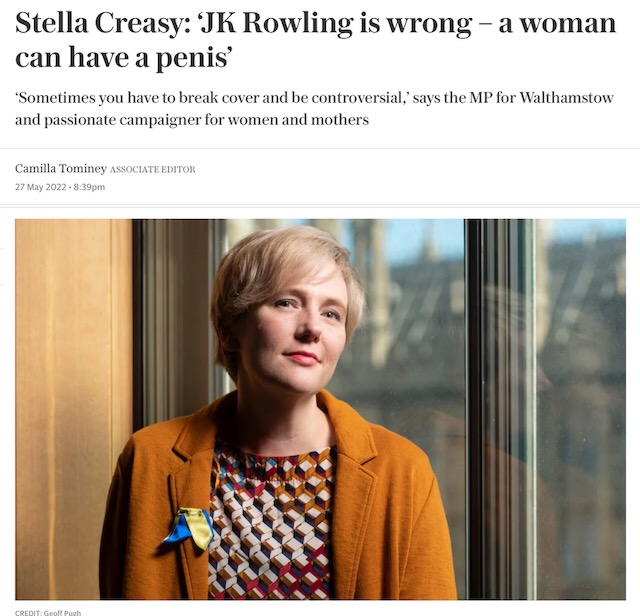
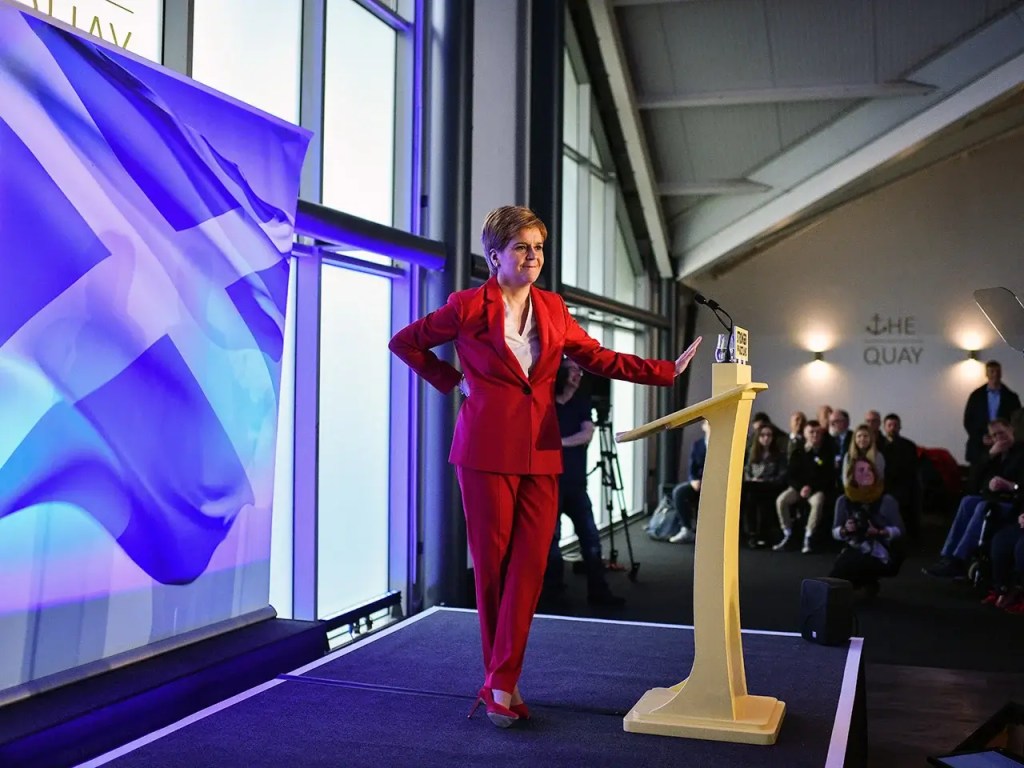
Although feminists such as J K Rowling have been bleating about the dangers posed to women by transwomen, they have been oddly quiet about the roots of this belief system. A recent article in Quillette listed ‘transwomen are women’ as one of the sacred beliefs of feminist ideology – here. Janice Fiamengo has discussed the feminist roots of trans culture in her substack post Anti-trans feminists are now reaping the whirlwind. If you look at the UK Members of Parliament who have pushed this ideology they have nearly all been female and feminist. These include Stella Creasy, Annelise Dodds, Nadia Whittome, Zara Sultana, Harriet Harman, and Lisa Nandy. Even feminist secular saint Jess Phillips managed to tie herself in knots on this issue by saying that although transwomen were not biological women they should be treated as such! Meanwhile, in Scotland it was Nicola Sturgeon of the SNP and Lorna Slater of the Green Party who tried to push gender self-ID. The common theme is that not only are these MPs female, but feminist. This crisis was brought to us by women ‘who would wheesht.’ It had nothing to do with misogyny.

Distortion of medical priorities
Take the recent maternity scandals at Shrewsbury. The belief that medical interventions to make childbirth safer were products of the patriarchy and the desire of men to control women’s bodies led to the pursuit of natural childbirth at all costs. The consequences of this to both mothers and babies have been disastrous and plain to see at Shrewsbury and Telford NHS Trust, Morecambe Bay and other NHS Trusts. Juliet Samual writing in the Daily Telegraph summed it up nicely in her article-The NHS is in thrall to a deranged progressive ideology that is harming mothers and babies. That progressive ideology was feminism.
There are similarities with the gendered narratives issue described above. Unless a health issue can be weaponised or even distorted it attracts little or no interest. Spending on research and cancer services has been distorted by breast cancer. This is not to suggest that those with breast cancer are not deserving of compassion and the best possible treatment, but it is not even the leading cause of cancer deaths among women – see figure below.
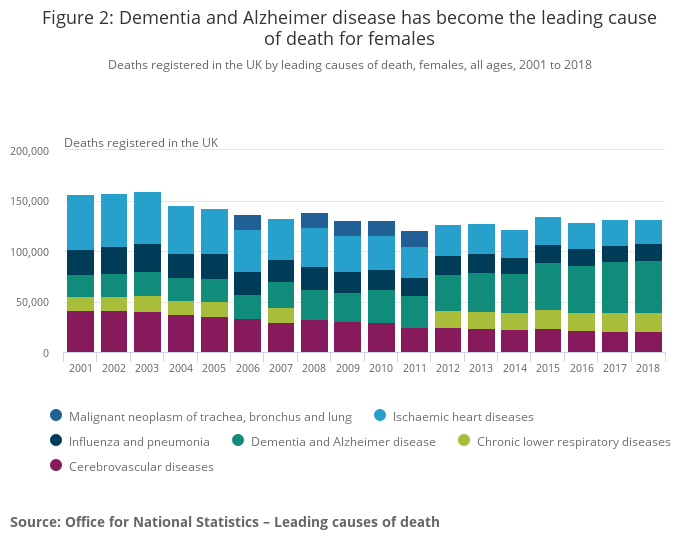
Again, breast cancer has been weaponised by activist journalists and attracts disproportionate resources relative to other important causes of death among women as well as men.
Making women feel less safe.
Most of the column inches about the safety of women and girls has concentrated on how they feel not their actual level of danger which is substantially less than that experienced by men and boys.
One reason for this is the availability heuristic. The more easily something can be recollected the more frequent it seems. Violence against women girls gets greater coverage in media, we have government policies on VAWG but not VAMB and so it becomes easier to recollect- so it must be more common. As a result, women overestimate the dangers they face from men and underestimate those they face from women.
There is also the issue of rigged and inflated statistics. For the purposes of UK Criminal Prosecution Service VAWG report, data presented under the title Violence against Women and Girls includes the total for both male and female victims. This is clearly morally indefensible, but also results in an exagerated sense of fear. It also spawned absurdly titled policy documents such as the infamous ‘Supporting Male Victims of Crimes Considered Violence Against Women and Girls.’ For more on the rigged statistics of VAWG, I recommend William Collins blog here.
There is also the issue of confected moral panics which is no better illustrated than the furor over spiking with via needle or by agents tipped into drinks. The evidence for an epidemic of spiking by injection is non-existent. The stories were based on unverified social media postings. That evidence was good enough for the BBC, however. In the article Girls Night In: ‘spiking is part of going out so we are staying in.’ It was claimed, without credible supporting data, that spiking was an ingrained part of university culture. The only evidence presented was the story of a 20 year old girl who suddenly felt unwell and collapsed on her boyfriend. This was a story of social contagion which is a particularly female vice. For a good account of this topic a I recommend Janice Flamingo’s recent substack posting ‘The Spectre of Needle Spiking Haunts the Land‘.
Conclusion
Because a big part of feminism is attacking men, feminists have to choose the issues that are best for this. The problem is that these issues are not always the most important. Furthermore, the confected moral panics have created the illusion that we are living in some kind of misogynist hellscape. Objective evidence suggests the opposite. Both men and women have a pro-female bias though this is expressed more strongly in women. See here and here.

 toxic feminism
I recently checked the idea that male victims of VAWG-crimes were counted in the female statistics. I didn’t find evidence that it was.
Do you have better info on this?
Mike
Mike Bell
Equi-law UK https://equi-law.uk/
Equality of opportunity and provision for boys and men in the UK
Text: 07790 299000
Talk: 01223 233200
LikeLike
Thank you.
My sources were.
1) William Collins blogpost ‘The Desolation of VAWG’ http://empathygap.uk/?p=551
2) The bizarre title of the document ‘Supporting Male Victims of Violence considered VAWG’ is suggestive though it does specifically state that the is the case. It does contains the line ‘The term ‘violence against women and girls’ refers to acts of violence or
abuse that we know disproportionately affect women and girls’
Naturally, If I have made a mistake I will correct it.
LikeLike