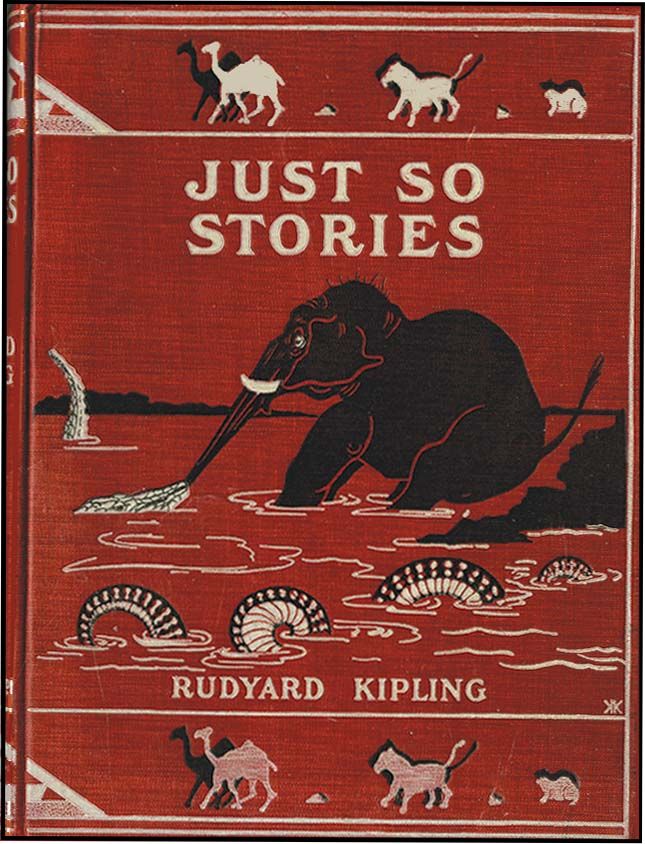
When I was a child my grandfather gave me the book ‘Just So Stories’ by Rudyard Kipling. Even then, at a tender age and longer ago than I care to remember, the stories seemed entertaining but trite. The book consists of a series of accounts of how animals acquired certain characteristics. For example, how the leopard acquired its spots or the camel got its hump and even how the alphabet was made.
In the wider anthropological sense, ‘just so’ stories are untestable narratives that account for how a cultural practice, biological trait or behaviour came about. All cultures have them and they can be a very good way of swaying opinion. We listen to and are influenced more by stories than by data. It is no surprise then that feminism is replete with just-so stories and, by and large, these nuance-free stories that feminists love to tell themselves do not stand up to scrutiny.
How women got equal pay
The gender pay gap is a foundational myth of feminism. Central to this myth is that the female sewing machinists at the Ford car plant in Dagenham struck for equal pay. The first, and most obvious problem with this belief is that there were no male sewing machinists to compare them with. So, as always, there must be some nuance operating.
The reality was that the Ford car plant at Dagenham was struggling against foreign competition and in an attempt to remain competitive, the owners imposed a new ‘rational pay structure’ that downgraded the pay band of semiskilled workers, both male and female. This included the female machinists. The union supported the case of the female machinists and a highly effective 4 week strike began. In May 1968 Minister Babara Castle agreed to the to the machinists demands (at this time there was central pay bargaining) and everybody was happy except perhaps the male workers who had also been downgraded and thought that solidarity and a pay rise would also extend to them. You could argue that Barbara Castle’s actions were a form of divide and rule wrapped in the raiments of social justice.
As Sheila Cohen, author of Notoriously Militant, writes
‘In other words, the roots of what passes for equal pay in this society lie not in any feminist movement for “justice” but in a highly pragmatic move by a skilful minister to sabotage an action that, at the time, threatened the entire economy – not to mention coinciding with quasi-revolutionary strike action in France. ‘ She goes on to say,
‘It is about time that middle-class politicians stopped rewriting history according to their own (mis)conceptions and started taking a good look at what actually happens out there in the real world‘
I couldn’t agree more. Will the story of the Dagenham-boys, who were excluded from the deal, ever be told in a sentimental film? I doubt it.
How the double helix was discovered..
The simplistic narrative or just-so story, in its most extreme form, runs along the lines of, Rosalind Franklin discovered the double helical structure of DNA, then Watson and Crick came along, stole her ideas and she was denied the Nobel prize that she deserved. A less extreme form of this narrative is that Watson and Crick stole her data and failed to credit her when they wrote their 1962 paper in Nature. Both stories are entirely false.
Did Watson and Crick steal Franklin’s results? The simple answer is no, but before answering that question it is worth noting many sources of data led to the Watson and Crick breakthrough. For example, crystallography data from Chris Astbury and Maurice Wilkins and a paper by Linus Pauling that was usefully wrong. Returning to Franklin’s data, it was not stolen. She had already presented her results in a public lecture in 1951 and she had sent her data to Max Perutz and Cambridge who showed it to Lawrence Bragg and Francis Crick. Even the provenance of image 51 is more nuanced. It was prepared by her student Raymond Gosling when Franklin was not in the lab but Maurice Wilkins was.
Did Franklin elucidate the double helical structure of DNA before Crick and Watson? Again, the simple answer is no. Indeed, she was initially strongly opposed to that idea and even invited Wilkins to a funeral service for the helical structure of DNA. Although Franklin eventually came to agree with Watson and Crick, she did not make the crucial breakthrough and Franklin herself did not believe she had been cheated.

Did Watson and Crick fail to acknowledge Franklin’s contribution? Yet again, the answer is no. Watson-Crick and Wilkins-Franklin wrote back-to-back papers in Nature and the former acknowledged their debt to the latter.
Was Rosalind Franklin forgotten (or in feminist parlance -erased) and denied a Noble Prize? Again no. By the time prizes were awarded for the discovery Franklin had sadly died and the prize is not awarded posthumously. Had she lived, it seems likely that she would have been awarded the prize alongside Maurice Wilkins.
Almost every aspect of the feminist just-so story is false. Accolades for scientific discovery are a rich area for this kind of revisionist history. Around every discovery and Nobel laureate, there is a penumbra of people who have also made important contributions, these figures are often well known by fellow professionals but not the wider public. If you selectively look at female contributors in the ‘penumbra’ it is easy to reach the conclusion that women are being erased or ignored. This, however, is an exercise in confirmation bias. – the opium of feminism.
For a more detailed account of Rosalind Franklin’s contributions I recommend the blog post of William Collins in The Illustrated Empathy Gap, here.
How women won the vote
The simple form of the narrative runs along the lines of men had enjoyed the vote since say 1066 and then along came the suffragettes who bravely and with justifiable violence, fought against the patriarchy and after a long struggle, won women the vote. This narrative has been damaging in many ways; just look at the way Just-Stop-Oil has used the actions and supposed success of the secular saints of the suffragette movement to justify their disruptive protests.
The attainment of universal suffrage (what we should be celebrating) was predominantly a struggle between the haves and have-nots and in that struggle men did most of the heavy lifting, sometimes losing their lives in the process. There were injustices that specifically affected women but in historic terms the difference between men and women acquiring the vote was small. The role of the suffragettes in that struggle has been overstated. Neither do the suffragettes deserve their secular-saint status – even by the standard of the times their movement was a regressive one.
At the time of the suffragette protests, it was, strictly speaking, property that enjoyed the vote. Indeed, looking back before the Reform Acts if you had lots of property you had lots of votes. This meant that 50% of men who didn’t own property could not vote and 100% of women could not vote in national elections. The inequity came about because of the rules surrounding property.
The suffragettes did not believe in votes for all women. Instead, they thought ‘respectable women’ should be given the vote. They were indifferent to and ignorant of, the plight of ordinary men and women.
The problem here was that the Labour and trade union movement was just getting going and they knew that if votes were given to ‘respectable women’ they would locked out of power, perhaps forever. Instead of building alliances and realising that votes for ‘respectable women’ were inextricably linked with those of working class men and women, the suffragettes ploughed the same dated and reactionary furrow.
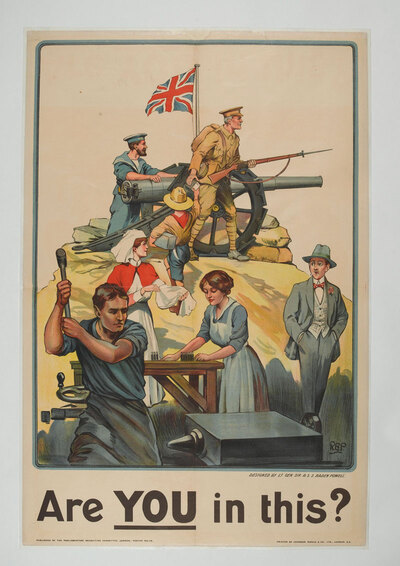
What factors did bring about universal suffrage? If the suffragettes had a role, it was to keep the issue alive, but ultimately it was World War One and a revolution in Russia that precipitated the 1918 Representation of the People Act. WW1 was arguably the first total war that mobilised the wider population. Men, half of whom did not have the vote, were conscripted into the armed forces and 750,000 of them died. Women, meanwhile, worked in munitions factories and on the land, filling the gap left by the men who were fighting in France and Belgium. It wasn’t tenable that they could be denied the vote any longer. Another factor concentrating the minds of the elites was revolutionary Russia. They had seen what events the turmoil of WW1 could unleash and were anxious to ensure the contagion did not extend to the UK.
However, the voting ages of men and women were different. Surely this is evidence of sexism? The voting age for men was 21 and that for women was initially set at 28. This wasn’t as some have claimed because women were deemed less mature. When the 1918 act was passing through Parliament, WW1 was still in progress and over one million men, who were mostly under 28, were dead missing or injured and in no position to vote. The different voting ages were to equalise the number of male and female voters. In modern parlance, it was about equity.
Conclusions
Rudyard Kipling’s stories were just harmless fun and meant to entertain. The just-so stories I have outlined are altogether more sinister. They are about maintaining the myth that men are powerful and women are oppressed and from this myth springs the power of feminists. As William Collins puts it,
The feminists are gradually re-writing history with cold blooded and malicious determination. In doing so they are stealing men’s birthright – the fact – and it is a fact to a very good approximation – that men built the modern technological world. Bit by bit, the public will come to believe that actually women did most of these things, and men just pretended it was them – the liars. And what few things were done by men would have been done by women if only men had not oppressed them so. Boys will come to believe that not only are men vile brutes, and always have been, but that they are also useless and liars.
You have been warned.

 toxic feminism
Good work.
You may find some of the myth-busting we did under this tab useful. MYTHS – Gender Parity UK https://genderparity.uk/myths/
LikeLike
Thank you. I will pursue these further.
LikeLike
Great post. What muddies the Rosalind Franklin story further is that many people assume Watson and Crick discovered DNA rather than its double helix structure (this isn’t political, it’s just one of those common misconceptions people tend to have). It’s possible that Franklin still wouldn’t have been awarded the Nobel Prize had she lived because it is only awarded to a maximum of three people if I’m not mistaken. Ada Lovelace is another figure whose scientific contribution, while not insignificant, has been overstated.
LikeLike
Thank you. As always, great points. I will add a link to the Ada Lovelace story, Gavan Tredoux has written well on that subject – https://www.spectator.co.uk/article/the-ada-lovelace-myth/
LikeLike