Or the gender lobbying gap
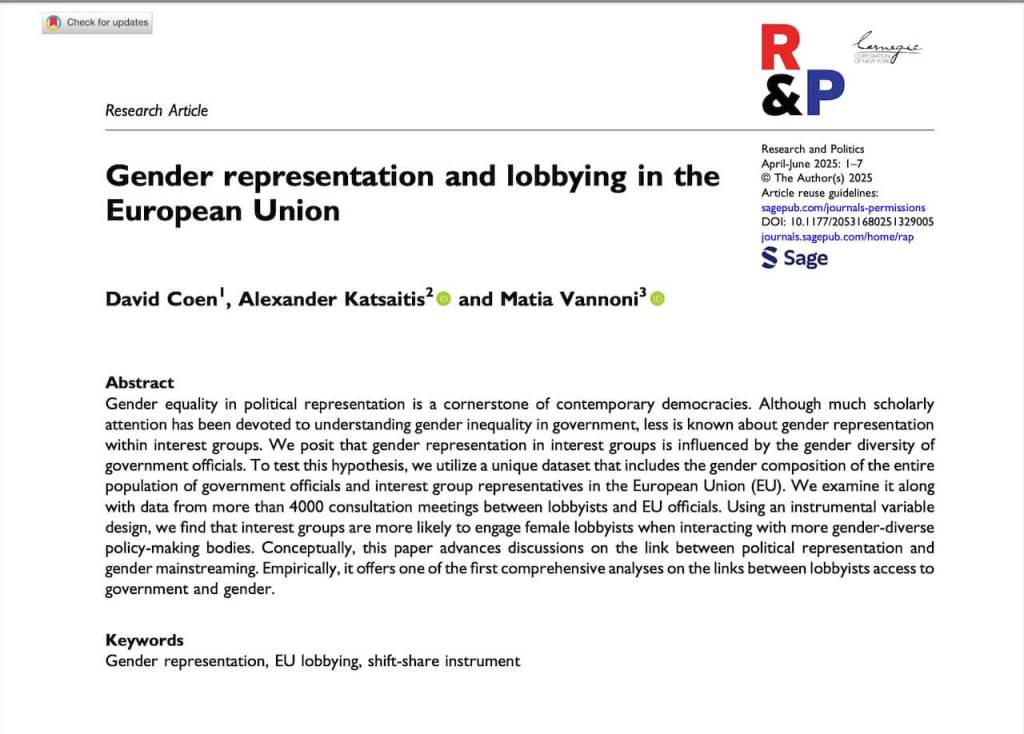
‘Female lobbyists are more likely to gain access to meetings with policymakers, regardless of the policymaker’s gender, indicating gender is used strategically by interest groups to improve their influence, finds a new UCL led study.’
A common feminist claim is that men occupy most positions of power and as a result, society is geared towards the needs of men. This is further weaponised by feminists, such as Charlotte Proudman, to argue that women can’t be sexist or misandrist because sexism equals ‘power + prejudice.’ Because women do not have societal power, the argument goes, they can’t be sexist towards men. This is the kind of motivated reasoning that most 6 year olds can easily see through. But anything goes in critical-theory infused feminism.
First, it is by not clear that men have greater institutional power. Two of the last five UK prime ministers have been female and the governing Labour Party has equal numbers of male and female MPs. However, politics is downstream of culture and there feminist ideology holds sway. The media in general and journalism in particular is dominated by women from a narrow range of backgrounds, mostly humanities graduates from a small number of universities see here and here.
Then there are taxpayer funded women’s lobbying organisations such as Women’s Aid in the UK or UN Women. The latter receives ~ $264 million a year from the UK taxpayers, male and female. Of the £516 million a year that goes to Women’s Aid less than half (£228 million) is spent on refuges. WA has used that money to turn itself into a powerful feminist lobbying organisation that has succeeded in distorting the narrative around domestic abuse and other issues.
It is also important to understand who has the ear of policymakers and here some intriguing data has emerged from a study looking at the EU, conducted by academics at University College London, Kings College London and Stockholm University see here. The researchers had access to data from the EU’s Joint Transparency Register and they studied data from over 4000 meetings between 2014 and 2021. Over most of this time, the UK was a member of the EU, so it was and probably still is affected by policy decisions originating from that source.
What the researchers found was startling. Having a female lobbyist increased the chance of a meeting with a policymaker by 35% compared to when the representative was male. Female lobbyists were more likely to get a meeting regardless of the gender of policymakers in charge but the effect was more marked for female policymakers. In short, women have greater access than men to policymakers in the EU and this can only be seen as a source of institutional power.
This pro-female bias mirrors the pattern we have seen elsewhere, that both sexes have a pro-female bias but this is more strongly expressed in women. For a good review of this subject, I recommend this article from Cory Clarke, The Myth of Pervasive Misogyny.
Although this study only looked at the EU, Matti Vannoni one of the study authors observed, “Although this study focuses on the European Commission, we believe these findings could be applied to lobbyists and legislators in developed democracies across the world and we are currently looking more broadly at lobbying codes of conduct, revolving doors and transparency registers.”
It seems to me that we are in a positive feedback cycle. We have taxpayer-funded feminist lobby groups who are in turn given easier access to policymakers and that results in greater funding for those lobby groups.
Also surprising to me was the lack of coverage this received in the media where there was barely a ripple. Suppose the study had shown the opposite, that male lobbyists had a 35% greater chance of being given access to policymakers, claims of institutional misogyny would have been all over our newspapers. Again, that could be viewed as evidence of female, or more specifically feminist power, manifested in the ability to control the public narrative.
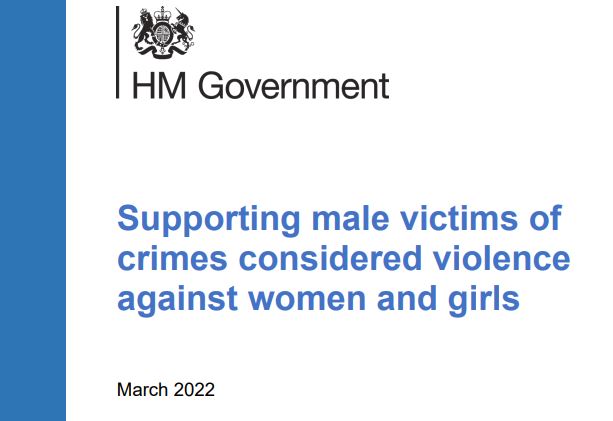
If you are ever wondering how a definition of Violence against Women and Girls (VAWG) came to include violence against men and boys and how that definition made it into a UN document, then into the ‘Istanbul Convention’ and from there UK law, think about the unchecked power of feminist lobbyists.
What to do? Well, organisations have to publish their gender pay gap data so why not also compel the bodies that govern us to publish their gender lobbying gap.

 toxic feminism
Women can’t say men have all the power. When a woman divorces a man for stupid reasons, or no reason at all, she does have absolute power with the full weight and authority of a female biased legal system backing her up. Family law is not about keeping families together–that would be for the best interest of the children, in most cases. Family law is about profit from good men/fathers because of emotionally abusive women/wives/mothers.
LikeLike